Out of Breath Running or Climbing Stairs? Your VO2 Max Is Trying to Tell You SomethingBuild the engine, lift the ceiling.
How-To & Guides

An Ironman triathlon is one of the most ambitious single-day endurance challenges in all of sport. It combines a 2.4-mile open water swim, a 112-mile bike ride, and a full 26.2-mile marathon run, completed back to back without rest. The name itself has become synonymous with human perseverance, and crossing that finish line to hear the words "You are an Ironman" is a life-changing experience for thousands of athletes every year. This is not a race you stumble into, but with the right plan, the right mindset, and enough runway, it is far more achievable than most people believe.
Benefits:
Expected Startup Costs:
An Ironman triathlon is a long-course triathlon race organized primarily by the World Triathlon Corporation, which owns the Ironman brand. The race consists of three disciplines completed sequentially: an open water swim of 2.4 miles (3.86 kilometers), followed immediately by a 112-mile (180-kilometer) bike ride, followed immediately by a full marathon of 26.2 miles (42.2 kilometers). Athletes must complete all three segments within a total time cutoff of 17 hours to be considered an official finisher.
The Ironman brand includes several race formats under its umbrella. The full Ironman, described above, is the flagship distance. There is also the Ironman 70.3, which is exactly half the distance across all three segments (1.2-mile swim, 56-mile bike, 13.1-mile run) and is commonly called a Half Ironman or a 70.3. The 70.3 distance is typically where most new long-course triathletes begin before stepping up to the full distance.
Ironman races take place all over the world, from the original Hawaii Ironman World Championship held annually in Kona on the Big Island, to races across North America, Europe, Asia, Australia, and beyond. Each race has its own unique course, terrain, and atmosphere, but all follow the same core format and rules. The Ironman brand is not the only organizer of long-course triathlon racing. Challenge Family is another major global race series that runs similar distances, and many independent races offer comparable formats. However, Ironman remains the most recognized name in the sport.
Finishing a full Ironman is widely considered a bucket-list athletic achievement. The race tests not just physical fitness across three very different disciplines but also pacing strategy, nutrition management, mental resilience, and the ability to stay consistent across many months of training. Most athletes who complete an Ironman describe it as one of the most meaningful things they have ever done.
The very first step is to simply get comfortable in all three disciplines at a basic level. If swimming is your weak spot, joining a masters swim group or taking a few adult swim lessons is one of the best investments you can make. Open water swimming feels very different from pool swimming, so eventually getting into a lake, reservoir, or calm coastal water in a wetsuit is important before race day. If you do not currently own a bike, you do not need to start with an expensive triathlon-specific bike. A road bike, a gravel bike, or even a fitness bike is perfectly adequate for early training. Cycling fitness is built over time, and the bike you start on is far less important than the hours you put in riding it. Running is the most accessible of the three disciplines, and if you are already a runner or have a running background, you are ahead of the curve.
Once you feel comfortable in all three sports individually, the next step is finding a training plan. There are many free and paid Ironman training plans available online from coaches and organizations like Training Peaks, Triathlete Magazine, and Ironman itself. Most full Ironman plans are 20 to 30 weeks in length. Many beginners benefit enormously from working with a triathlon coach, even remotely, who can tailor a plan to their fitness level, schedule, and life demands.
After selecting a plan, registering for a race is important for accountability. Having a specific race date on the calendar is a powerful motivator. Ironman races sell out months or even years in advance, so registering early is often necessary. The Ironman website allows you to search by region and date to find a race that fits your timeline.
Finally, connecting with a local triathlon club is one of the best things a new Ironman athlete can do. Clubs offer group swim workouts, group rides, brick workouts (bike followed immediately by a run), and a community of experienced athletes who have already been through the process and are eager to share what they know.
How-To & Guides
Nutrition & Fueling


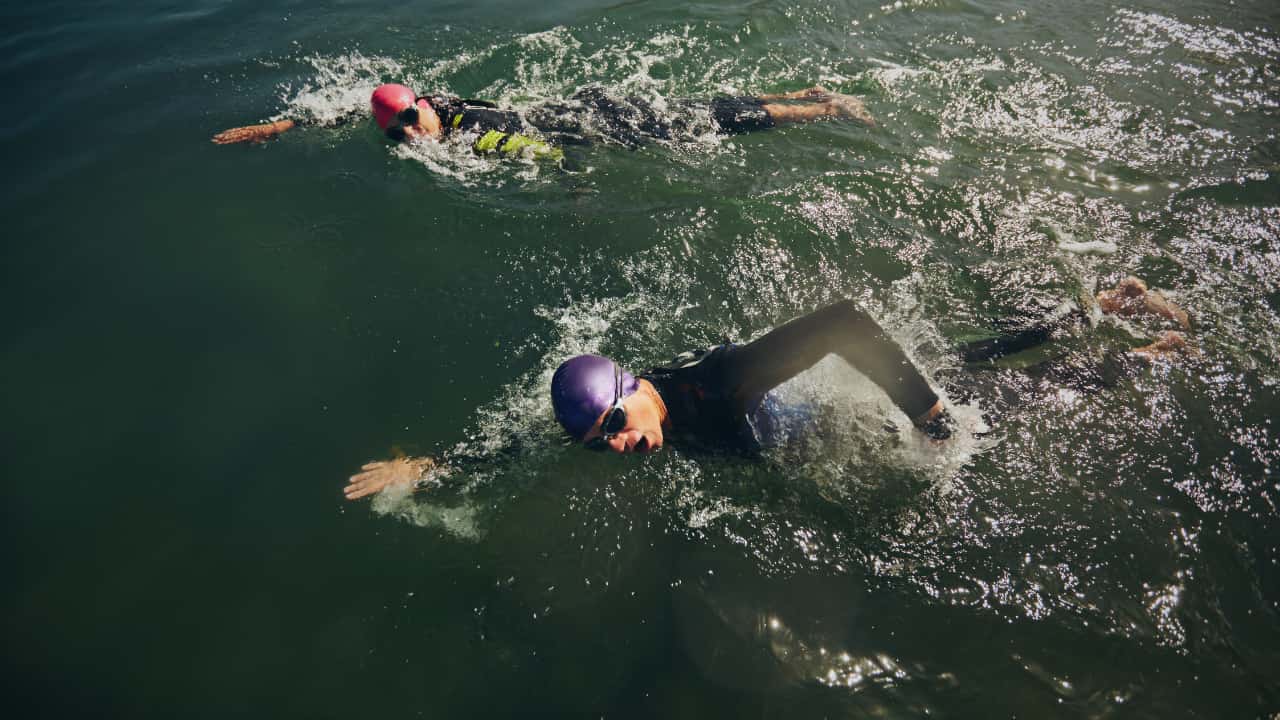
The first 90 days of Ironman training are about building aerobic base and developing consistency across all three disciplines. This period is not about intensity or speed. It is about getting your body accustomed to frequent multi-sport training and establishing a sustainable weekly routine.
In weeks one through four, most plans have you swimming two to three times per week focusing on form and endurance, riding two to three times per week at an easy, conversational effort, and running two to three times per week at a similarly easy pace. Total weekly training time at this stage is typically between six and ten hours depending on your starting fitness. This may sound like a lot, but spread across seven days it is manageable for most people with a bit of planning.
By weeks five through eight, training volume begins to increase gradually. Your long ride on the weekend gets longer, your long run gets longer, and you begin to experience what triathlon training is really about: managing fatigue across multiple disciplines. You may notice that your legs feel tired on runs after heavy bike days, and learning to run on tired legs is one of the most important skills you will develop. This is why brick workouts, where you bike and then immediately run, are a core part of any Ironman training plan.
Weeks nine through twelve introduce slightly more structured workouts, including tempo runs, threshold bike efforts, and longer open water swim sessions if conditions allow. You will also likely complete your first tune-up race during this period, whether a sprint triathlon, an Olympic-distance triathlon, or a standalone run race, to practice racing under real conditions.
Throughout the first 90 days, expect to feel tired. Fatigue is normal and expected. Sleep becomes one of your most important training tools. Nutrition also starts to matter more, not just on race day but day to day. Many athletes are surprised by how much they need to eat to support this level of training, and learning to fuel properly during long workouts, particularly on the bike, is a skill that takes practice. Stomach issues during long training sessions are extremely common for new triathletes and usually improve over time as you experiment with different nutrition strategies.
Race Guides

Triathlon, and Ironman in particular, has a well-earned reputation for being an expensive sport. The good news is that you do not need top-of-the-line gear to train or even to race your first Ironman. Many athletes have finished Ironman on modest equipment. Here is a breakdown of what you need and what it is likely to cost.
For swimming, you need a swimsuit or tri suit, goggles, and ideally a swim cap. A good pair of goggles runs between 20 and 50 dollars. A wetsuit is highly recommended for open water swimming and is required or permitted at most Ironman events depending on water temperature. Entry-level wetsuits designed for triathlon cost between 150 and 300 dollars new, and buying a used wetsuit in good condition is a smart way to save money early on.
For cycling, the bike is the largest and most significant investment. A basic road bike suitable for Ironman training can be found used for anywhere between 500 and 1,500 dollars. A new entry-level triathlon or time trial bike starts around 1,500 to 2,500 dollars. High-end triathlon bikes can cost 8,000 to 15,000 dollars or more, but these are absolutely not necessary for a first Ironman. You will also need a helmet, which is required by race rules and should be purchased new for safety reasons. A quality helmet runs between 50 and 200 dollars. Cycling shoes, pedals, a bike pump, a saddle bag with a spare tube and tools, and bike shorts or a tri suit round out the basics. Expect to spend between 100 and 300 dollars on these cycling accessories depending on what you already own.
For running, a good pair of running shoes that fit your foot and gait are the most important purchase. Plan to spend between 120 and 180 dollars on shoes, and replace them every 300 to 500 miles of use. Running socks designed to prevent blisters are also worth the investment.
For race day and training in general, a GPS watch that tracks time, distance, and heart rate is extremely useful. Entry-level triathlon GPS watches from brands like Garmin, Coros, and Polar start around 200 to 300 dollars. A heart rate strap for more accurate monitoring adds another 30 to 80 dollars.
Ironman race entry fees are another significant cost. Full Ironman race entries typically cost between 700 and 900 dollars. Ironman 70.3 entries run between 300 and 500 dollars.
All in, a first-time Ironman athlete training on a sensible budget should expect to spend somewhere between 2,000 and 5,000 dollars to get properly equipped and registered, assuming they are starting from scratch and buying modestly. Athletes who already own a bike, running shoes, and basic swim gear can get started for considerably less.
Ironman training is built around one fundamental principle: progressive overload applied across three disciplines simultaneously. That means your training volume and intensity increase gradually over time, with planned recovery built in, so your body can adapt and grow stronger without breaking down.
A standard Ironman training plan for a beginner to intermediate athlete runs 20 to 30 weeks and is structured around a weekly schedule that typically includes two to three swims, three to four bike sessions, three to four runs, and one or two brick workouts per week. As race day approaches, long sessions get longer and the emphasis shifts from building base fitness to race-specific preparation and then to a taper period of two to three weeks before the race where training volume drops sharply to allow the body to fully recover and arrive at the start line fresh.
Heart rate training is foundational to Ironman preparation. The vast majority of Ironman training is done at low intensity, often referred to as Zone 2, which is an aerobic pace where you can hold a conversation without gasping. Training easy most of the time builds the aerobic engine that will carry you through the long race day. Many new triathletes make the mistake of training too hard too often, which leads to burnout, overtraining, and injury. Patience and consistency at low intensity are the cornerstones of long-course triathlon preparation.
Strength training, particularly for core stability, hip strength, and shoulder endurance, is an increasingly common complement to swim, bike, and run training among Ironman athletes. Two short strength sessions per week have been shown to reduce injury risk and improve efficiency across all three sports.
Nutrition periodization, meaning eating strategically to fuel training and recovery, becomes increasingly important as training volume rises. Many athletes work with a sports nutritionist or dietitian to dial in their daily eating habits and their on-course nutrition strategy, which refers to what they will eat and drink during the race itself. The Ironman bike leg is where most athletes take in the majority of their calories, typically through gels, chews, bars, and sports drinks. Getting comfortable eating on the bike and learning exactly what your stomach can tolerate at race effort are skills developed over months of practice, not discovered on race day.
Progression in Ironman is highly individual. Some athletes improve dramatically year over year as fitness builds and technique improves. Others may plateau and benefit from coaching, adjustments to training structure, or addressing limiters in one specific discipline. The swim is the most technical of the three sports and often sees the greatest improvement with focused instruction. Cycling fitness responds strongly to structured intervals and consistent volume. Running off the bike, sometimes called the run off the bike or simply the Ironman run, is its own unique challenge and is best developed through consistent brick training throughout the training cycle.
Most athletes who complete their first Ironman immediately start thinking about their second, and many develop a multi-year relationship with the sport, chasing faster times, different courses, or the chance to qualify for the Ironman World Championship in Kona. However far you want to take it, the journey begins the same way for everyone: one swim, one ride, one run at a time.